

As January 2026 approaches, many Americans are encountering widespread claims online about a supposed $2,000 federal deposit for beneficiaries, retirees, and taxpayers. These posts often appear urgent and authoritative, prompting excitement and concern. However, much of this information is misleading or speculative. Understanding what is officially confirmed versus what is rumor is essential for planning finances and avoiding unnecessary stress.
Why the $2,000 Claim Keeps Circulating
The $2,000 figure has become widely recognized due to pandemic-era stimulus payments, which set a precedent for direct federal deposits. Over time, it also became loosely associated with average tax refunds and certain refundable credits. Social media and forwarded messages frequently combine these concepts, creating the impression of a new, guaranteed $2,000 payment. The result is widespread confusion, even though no formal government program has approved such a payment for January 2026.
What Is Officially Confirmed

As of now, there is no federal program guaranteeing a $2,000 deposit for all Americans in January 2026. Congress has not passed legislation for such a payment, and no federal agency has issued an official announcement regarding a universal deposit of this amount. What is confirmed is that existing systems continue to operate as usual:
- Federal tax refunds are processed based on filing date, accuracy, and eligibility.
- Social Security, SSI, and SSDI benefits follow their regular monthly schedules.
- Other federal payments, including refundable credits or prior-year corrections, will continue on their normal timelines.
Who May Actually Receive Federal Deposits
Even without a special nationwide payment, some individuals may still see deposits early in 2026. These are based on personal eligibility, not a new relief program. Examples include:
- Taxpayers who file early and qualify for refunds may see direct deposits in January or February.
- Individuals receiving corrected or delayed payments from prior years.
- Social Security recipients and other benefit program participants who receive regular monthly payments.
The key takeaway is that any deposit near $2,000 is specific to individual circumstances, not a guaranteed federal program.
Why Amounts and Timing Differ
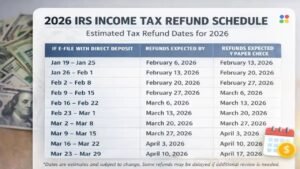
Federal payments do not automatically trigger based on the calendar. Amounts and timing depend on multiple factors:
- Submission date: Early filing can speed up refunds, but verification is still required.
- Direct deposit vs. check: Electronic deposits are faster than mailed checks.
- Verification requirements: Discrepancies or missing information can delay payments.
- Income and household factors: Refunds and credits are calculated based on filing status, dependents, and prior-year data.
These variations explain why some recipients may receive deposits near $2,000, while others see higher or lower amounts.
How to Avoid Confusion and Misinformation
The best approach is to rely on official sources and personal account information:
- Check IRS notices and your myIRS account for verified updates.
- Ensure banking and mailing details are current to avoid delivery delays.
- Review tax filings and benefit statements for accuracy.
- Ignore viral posts or unverified social media claims.

Official programs are publicly documented and well-communicated in advance. Any new federal payment would be announced clearly with guidance for recipients.
Final Reality Check for January 2026
There is no confirmed federal $2,000 deposit scheduled for all beneficiaries in January 2026. While some individuals may receive refunds, corrections, or benefit payments close to $2,000, these amounts are based on personal eligibility and existing programs. Standard federal timelines for tax refunds and benefits continue to apply.
Staying informed through official channels, updating personal records, and monitoring IRS or federal agency communications are the only reliable ways to ensure you receive any payments you are entitled to.
Disclaimer: This article is for informational purposes only. Federal payments, refunds, and benefit amounts depend on individual eligibility and official government rules. This content should not be considered financial, legal, or tax advice. Readers should verify details through official government sources.